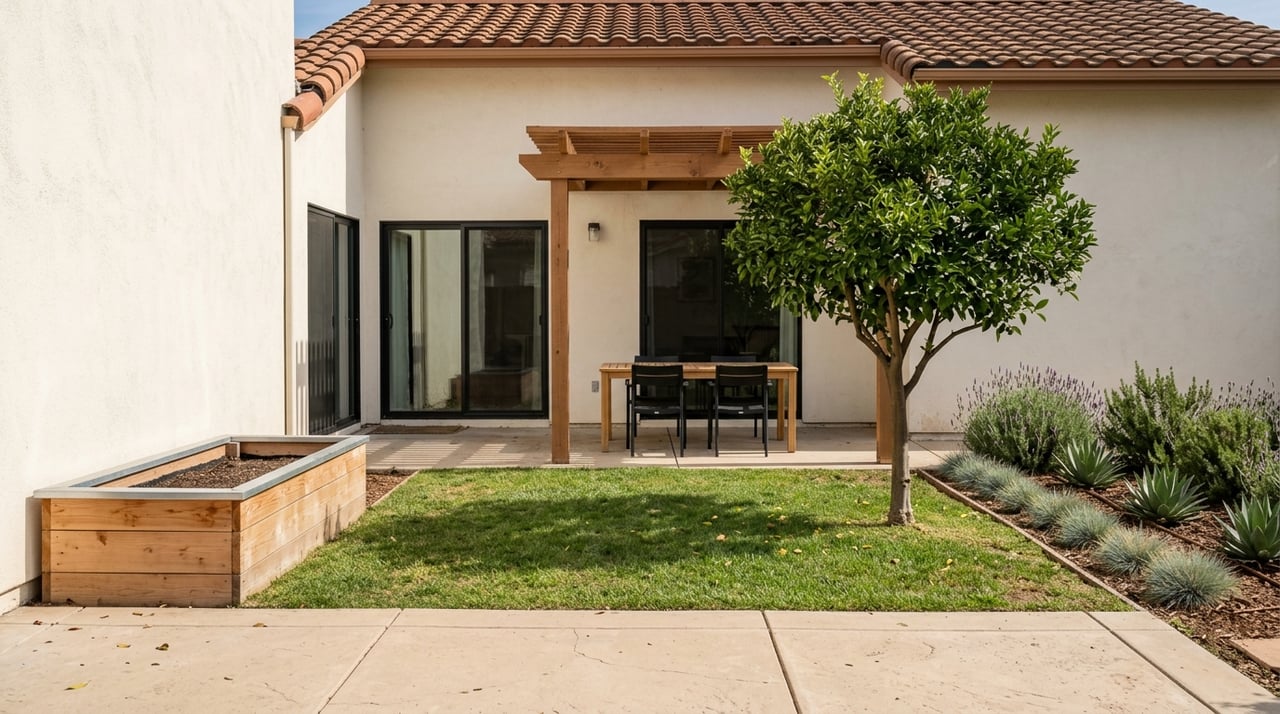
Small-Town Living In Dixon: What Buyers Should Know
July 9, 2026
July 9, 2026
Wondering if Dixon is the right fit when you want more breathing room without feeling too far from work, shopping, or everyday essentials? If you are drawn to a community with a clear local identity, a lower-rise feel, and strong agricultural roots, Dixon deserves a closer look. For many buyers, the appeal is not just the homes themselves. It is the lifestyle that comes with living in a compact Solano County city that still feels distinct. Let’s dive in.
Dixon is a small city by size and population, with an estimated 19,309 residents in 2023 across 6.7 square miles. The city was incorporated in 1878, and that long history still shows up in the way the community talks about itself and plans for growth.
According to the City of Dixon’s planning documents, small-town character is a defining feature of the city. You are not looking at a dense suburban grid with rows of taller buildings and tightly packed blocks. Instead, Dixon is best understood as a compact, low-rise community with a visible sense of place.
The city also describes itself as being ringed by agricultural and open-space lands, with downtown centered around a low-rise Main Street feel. In many neighborhoods, homes are generally one to two stories, which helps preserve the calm, approachable scale many buyers are looking for.
Dixon’s identity is closely tied to agriculture and the railroad. City history notes that the town formed around the railroad in the late 1860s, with rail traffic helping move farm crops, meat, and animals. The city also refers to Dixon as a small farm town and notes that it was known as The Dairy City in the early 1900s.
That history is not just something you read on a plaque. It still shows up in the traditions and events that shape local life today. If you value a place where local culture feels active and recurring, this is a meaningful part of Dixon’s appeal.
Two events help tell the story of Dixon especially well. The Dixon May Fair is the city’s signature event, and its official site says it is the oldest district fair and fairgrounds in California. The Dixon Historical Society notes that the first May Fair was held in 1875.
Another well-known tradition is the Lambtown Festival, described by its organizers as California’s largest sheep and wool event. The festival began as a Dixon May Fair exhibit in 1985 and later grew into a larger fairgrounds event.
For buyers, the takeaway is simple. Dixon’s community identity is built around more than a small population count. It is supported by long-running traditions that reflect the city’s agricultural roots and local pride.
If you are starting your home search in Dixon, the housing mix is an important part of the picture. City housing data show that 81.4% of housing units are single-family homes. Smaller shares include 6.3% in two-to-four-unit buildings, 11.7% in multifamily buildings with five or more units, and 0.7% mobile homes.
That means detached homes remain the dominant housing type. If your goal is a traditional single-family property, Dixon offers a market where that kind of housing still shapes much of the city’s character.
The city’s occupancy data also show 69.9% owner-occupied households and 30.1% renter-occupied households. That mix can appeal to buyers who want a community with a strong ownership base while still offering some rental inventory.
One important thing to know is that much of Dixon’s housing is older rather than brand-new. The city’s housing element reports that 66.5% of the housing stock was built between 1960 and 1999, and well over half of all units are more than 30 years old.
That does not automatically mean homes are outdated, but it does mean you should be ready to see a lot of established properties. Depending on the home, that may come with mature landscaping, more traditional layouts, or the need to look closely at updates and maintenance.
For many buyers, this is where local guidance matters most. It helps to know how to compare an older home with updated features against one that may need work, especially if you are trying to balance budget, condition, and long-term plans.
Dixon’s zoning pattern helps explain why many homes feel like they sit on more traditional suburban-style lots. The current zoning ordinance sets minimum lot sizes of 7,000 square feet in the RL residential district and 8,000 square feet in the RM district, with minimum lot depths of 100 feet or 130 feet in certain locations near major corridors.
Older housing planning materials also point to traditional single-family minimum lot sizes that were effectively around 7,500 square feet under the prior code. While no specific property is guaranteed to match that pattern, buyers can generally expect established lot configurations rather than tiny urban parcels.
If you are moving from a denser market, this can be one of Dixon’s biggest lifestyle advantages. More lot area often means more separation between homes, more usable yard space, or simply a more open residential feel.
Dixon is also shaped by Measure B, first approved in 1986 and reaffirmed in 1996. The measure limits annual residential growth to no more than 3% of the prior year’s housing stock and aims to keep the city roughly 80% single-family and 20% multifamily.
For buyers, this helps explain why Dixon has maintained a relatively consistent development pattern over time. The city’s growth approach has supported its small-scale identity and its emphasis on single-family housing.
It may also help explain why the for-sale market can feel competitive. The city’s housing data reported an ownership vacancy rate of 0.6%, which suggests a relatively tight ownership market when paired with measured long-term growth.
Dixon has historically developed between the railroad tracks and Interstate 80. City housing analysis says most non-residential uses and multifamily housing are located closer to those edges, while newer growth has moved into planned expansion areas.
The general plan adds that downtown buildings are generally one to three stories, while neighborhoods are typically one to two stories. For buyers, that means much of Dixon keeps a lower-profile built environment, even as the city continues to evolve.
This layout can be useful when thinking about your search priorities. Some buyers want to be closer to services and commuter access, while others may prefer more established residential sections with a quieter feel.
Dixon sits along Interstate 80, which is a major plus for many commuters. The city says it is about 30 minutes from Sacramento and Sacramento International Airport, and a little more than an hour from the Bay Area.
That location can work well if you need access to nearby job centers but do not want to live in a denser urban environment. For buyers relocating from other parts of Solano County, Yolo County, or the Sacramento corridor, Dixon can offer a practical middle ground.
At the same time, it is important to have realistic expectations. Dixon works best for buyers who drive or who are comfortable building their routine around a limited regional transit network.
Dixon does have regional bus access. Fairfield/Suisun Transit Route 30 runs Monday through Friday from Dixon eastbound to UC Davis and Sacramento and westbound to Vacaville and Fairfield, with five weekday trips in each direction and a stop at the Market Lane park-and-ride.
Within the city, Dixon Readi-Ride provides curb-to-curb service inside city limits. The city also offers paratransit trips to medical appointments in Vacaville and Davis.
These are useful options, but they do not function like a dense urban transit system. If you are choosing Dixon, it makes sense to think through your daily drive time, work schedule, and how often you expect to rely on public transportation.
Dixon can be a strong choice if you are looking for:
It may be less ideal if your top priority is a brand-new home in a high-density setting or a lifestyle built around frequent, flexible public transit.
As you explore Dixon, try to balance the lifestyle benefits with the practical details of the housing stock. A home with more yard space and a well-established neighborhood can be a great fit, but you will still want to evaluate age, condition, and updates carefully.
It also helps to look beyond the listing photos. Pay attention to commute patterns, lot configuration, proximity to major roads, and how each part of town feels in person. In a city like Dixon, those day-to-day details often shape your experience as much as square footage does.
If you are comparing Dixon with nearby markets, the biggest question is often not just price. It is whether you want the tradeoff of a smaller, more rooted community with a lower-rise feel and a more measured pace of growth.
When you want local insight on Dixon and the broader Solano County market, Hayley Hagen can help you compare neighborhoods, evaluate homes, and move forward with clarity.
Stay up to date on the latest real estate trends.

Hayley Hagen offers a level of local knowledge and personalized service that sets every client up for success. Whether you're buying, selling, or investing, Hayley delivers a seamless experience backed by strong communication and results you can trust.

Hagen, Hayley Marissa | CA DRE# 02181946
Twin Oaks Real Estate Inc | CA DRE# 01845706
231 First St, Benicia, CA 94510